

Chemical peels, administered by the non-surgical experts at Helen Cleland of Cheltenham, are a highly effective technique used to improve and smoothen skin texture. While facial skin is the most commonly treated area, specialised peels are available for the back, particularly those suffering from acne problems. Chemical peels can address various concerns such as scarring, acne, pigmentation, rosacea, pore size reduction, oil production, and wrinkling.
These peels aim to remove the outermost layer of dead skin cells, inducing a controlled injury to the skin and initiating the natural healing process. With the regeneration of new tissues, improvements in skin appearance and texture can be achieved. Depending on the type and depth of the peel, you may experience light flaking, redness, and skin peeling. For optimal results, a course of 3-4 peels is recommended.
Our skin peel treatment can be customised to suit individual skin types and concerns, ranging from oily to acne scars or sensitive and pigmented skin for a more even skin tone. They can also be layered to achieve a deeper effect or adjusted for lighter peels with minimal downtime. Our range of chemical skin peels addresses multiple skin concerns, including:
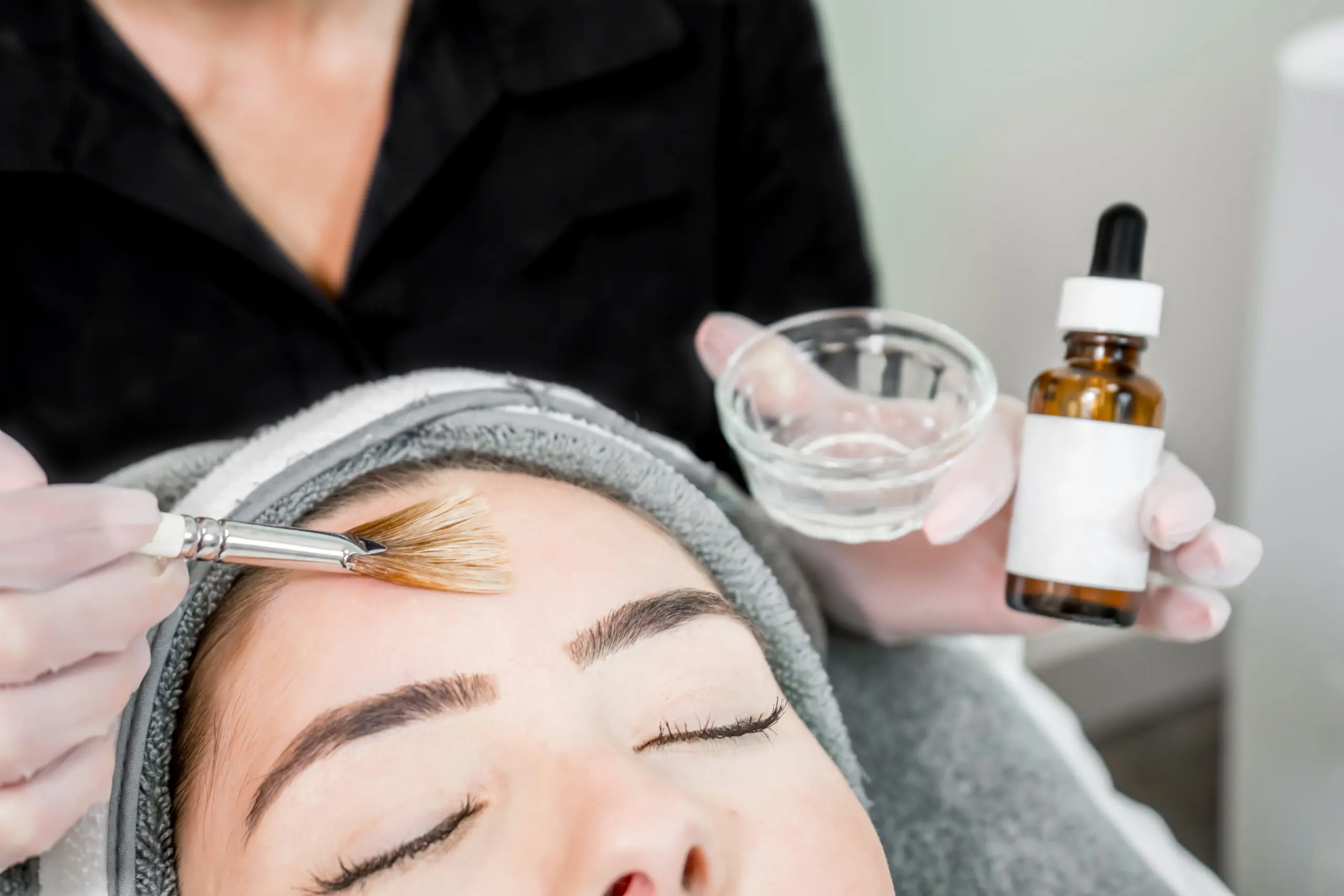
Chemical peels are a popular method of treating various skin conditions, such as acne, wrinkles, and hyperpigmentation. The process involved in the chemical peels may vary based on the type chosen. However, comprehensive pre-treatment preparation is conducted to ensure maximum effectiveness regardless of the type. The first step involves using a medical degreaser to prepare the skin by eliminating all the residue oils. Once this is complete, the chemical agent is applied to the skin.
Sensations experienced by the client vary from mild stinging to burning or itching, depending on the chemical agent’s strength. This sensation is temporary and subsides shortly after the peel is removed. Some peels are designed to self-neutralise and remain on the skin for a more extended period of 2-4 hours. The process is safe, effective, and non-invasive, making it an extremely popular treatment option.

Chemical peels are a popular skin treatment method used to rejuvenate skin and improve its appearance. The recovery period after a chemical peel may differ depending on the type and strength of the peel. It is essential to note that after the procedure, you may experience skin tightness and redness, which is a normal part of the healing process. However, the duration and intensity of peeling may vary as per the depth of the peel. In some cases, light and fluffy peeling might occur. But don’t worry, as it can be easily managed with the application of moisturisers.
Generally, the peeling process may last anywhere from 3-5 days, depending on the specific treatment. Post-treatment care is crucial in enhancing the healing process, ensuring the desired results are achieved. Proper aftercare may include avoiding direct sun exposure, avoiding scratching or picking at the peeling skin, and using a gentle cleanser and moisturiser to promote healthy skin. By following the right aftercare instructions, you can enjoy the benefits of chemical peels without any complications.


Alumier Glow Peel Combines 7% lactic acid, 7% salicylic acid and 7% resorcinol. This creates a multipurpose resurfacing solution effective in minimising the appearance of fine lines, wrinkles and hyperpigmentation i age spots, discolouration and uneven skin tone.
Alumier MD Radiant Elite – A personalised skin peel where we recommend a variety of products that are layered onto your skin to give the best results.
Enerpeel® EL – Specifically designed for treating in and around the eye socket and the lip margin. A treatment for hyper-pigmentation and photo-ageing.
Enerpeel® TCA LP 25% – For anti-ageing, sun damage, severe hyper-pigmentation, severe scars and raised scar reduction.
Looking for a safe and effective way to enhance the appearance of your skin? Look no further than the chemical peel treatments offered by Helen Cleland in Cheltenham. Our professional treatments are designed to help you achieve healthier, more glowing skin by removing dead skin cells, improving texture and tone, and reducing the appearance of fine lines and wrinkles.
Whether you’re dealing with acne scarring, sun damage, or simply want to refresh and rejuvenate your skin, our chemical peel treatments can help you achieve the results you’re looking for. So why wait? Contact Helen Cleland today to schedule your consultation and take the first step towards achieving the beautiful, radiant skin you deserve.
Looking for any of our other treatments? We also offer platelet rich plasma treatment, microneedling, excessive sweating treatment, and more!
Procedures may vary dependent on the type of chemical peel chosen. Skin is prepped using a medical degreaser to ensure the treated area is free of any oils left on the skin. The chemical agent is then applied and typically remains on the skin for 3 to 5 minutes. Most patients feel a temporary stinging that usually subsides after a few minutes. Some peels are designed to self-neutralise and may remain on your skin for 2-4 hours.
Recovery times will vary based on the type and strength of the peel. Immediately after the peel, your skin will feel tight and may be red. Any visible peeling will be light and fluffy and easily controlled with moisturizer. Peeling usually lasts 3-5 days, depending on the actual peel treatment. Use of gentle cleanser, moisturizer and sunscreen is important, as it will enhance the healing process and results. Normal activity may be resumed after the peel, however strenuous exercise and heavy sweating should be avoided for 2-3 days. Sun exposure should be avoided while skin is peeling; exposure of treated skin to a lot of heat should also be avoided as it may induce swelling, redness and for deeper peels blisters under the skin. Peeling skin should be allowed to slough off naturally; picking or peeling of flaking skin is prohibited, as it may lead to scarring. Use of prescription topicals should be avoided for 3-5 days post peel.
Chemical peels should be avoided if any of the following conditions are present: